
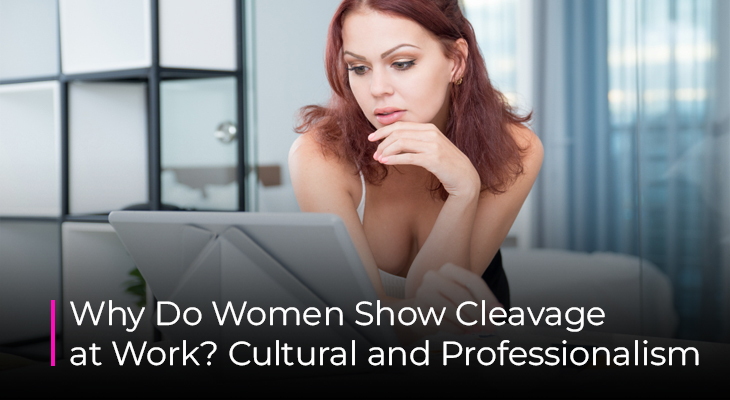
Women show cleavage at work for many reasons: it is about feeling confident, comfortable, or showing their own style. In today’s offices, clothes are not just about rules but about fashion, expression, and looking professional in a way that feels natural.
Many people still think that showing cleavage at work is always “wrong” or “unprofessional.” But that’s not always true. Modern workwear for women has changed a lot. It now reflects who they are, how they feel about their bodies, and how workplace culture is evolving.
A woman might choose a dress or top that shows some cleavage because it fits her body shape, or because the fabric or design naturally looks that way. It doesn’t always mean she’s trying to draw attention.
How a woman dresses at work depends on her comfort, personality, culture, body type, and the company’s dress code. For some, showing a bit of cleavage is part of their confidence and power. For others, it’s simply what feels normal and comfortable to wear.
Reasons Women Show Cleavage at Work!
There is not just one reason why women show cleavage at work. It can be a mix of confidence, comfort, culture, and personal style.
1. Clothing is a form of self-expression
Every person, man or woman, expresses themselves through what they wear. Some people prefer suits and closed collars. Others like dresses that are light or slightly open at the neckline.
For many women, showing a bit of cleavage isn’t about seeking attention. It’s about feeling confident and natural in their own skin.
Fashion changes with time. In the 1980s, power suits were the trend. In the 2000s, softer, more expressive office wear became common. Today, many workplaces have moved toward “smart casual,” where comfort and style meet.
When clothes make someone feel good, they often perform better at work. Confidence and comfort go hand in hand.
2. Different workplaces, different norms
What’s “too revealing” in one office might be completely normal in another.
A woman working in a creative industry like media, fashion, or design may have more freedom in her clothing choices. But a woman in a law firm or a bank might have a stricter dress code.
It’s about culture and context. Every workplace develops its own unwritten style code over time.
For example:
- In tech startups, jeans and casual tops are fine for both men and women.
- In hospitals or schools, modesty and professionalism come first.
- In fashion or entertainment, expression is part of the job.
So when someone says, “Why is she wearing that to work?”, the answer often depends on where “work” actually is.
3. Confidence and body acceptance
For many women, showing a bit of cleavage isn’t about others; it’s about themselves.
Society often tells women to hide or change their bodies. But as conversations around body positivity and self-acceptance grow, more women choose clothes that make them feel proud of who they are. Cleavage is considered attractive, NO DOUBT! And understanding this can also help shift the focus from judgment to appreciation of natural confidence and beauty.
If a woman feels confident in a certain outfit, that confidence often reflects in her work performance, communication, and leadership. Confidence is magnetic. It draws attention naturally, not forcefully.
4. Cultural and climate influence
Culture and climate also affect how people dress. In warmer countries, lighter fabrics and open necklines are common simply because of the heat. In colder regions, people wear more layers.
Cultural upbringing matters too. Some societies are more conservative, while others see cleavage as normal. For instance, in some Western countries, showing a bit of cleavage at work might not raise eyebrows. But in certain Asian or Middle Eastern cultures, it might be considered inappropriate.
The key here is contextual awareness; knowing what’s normal and respectful where you are.
5. Fashion trends and fit
Fashion plays a big role. Many professional dresses, blouses, and suits are designed with V-necks or scoop necks, not to be revealing, but to create a balanced, fitted look.
Sometimes cleavage simply shows because of body shape or how clothing is cut, not because someone intended it. Picking the right type of bra for your body shape can also make a big difference in how a neckline looks and feels throughout the day.
Body types differ. The same shirt that looks simple on one person might look more revealing on another. So, it’s not always about choice. It can also be about fit and body proportion.
6. The double standard
It’s important to note that women often face more scrutiny over their clothing than men do. A man can wear a tight shirt showing his muscles, and no one calls it unprofessional. But a woman wearing a fitted blouse might be judged differently.
Research supports this. A study published in Springer Journals found that women wearing a more “provocative” blouse were often rated less competent for senior roles than when dressed more conservatively.
Another survey reported that 45% of senior managers have seen cleavage in the office, and 87% found it distracting, showing how strong biases about women’s clothing still exist in workplaces.
These numbers highlight how much perception, not actual professionalism, still shapes opinions about women’s attire.
Interestingly, studies about why men notice cleavage suggest that social conditioning, not intent, often shapes how people react to women’s clothing.
7. Professionalism is more than clothing
Professionalism isn’t just about how you look. It’s about how you behave, communicate, and perform your job.
A person can wear modest clothes and still be rude or careless. Another can wear something slightly revealing but remain completely respectful, skilled, and serious about their work.
The real focus of any workplace should be:
- Are employees respectful?
- Are they capable and responsible?
- Do they follow company values?
Clothes alone don’t define professionalism; attitude does.
8. Respect and awareness go both ways
Respect should come from both sides.
Women should be aware of their company’s dress culture and represent themselves confidently yet appropriately.
Colleagues and employers should also respect personal choices and avoid making assumptions about a person’s character based on their clothing.
A healthy workplace is one where appearance doesn’t overshadow ability.
Final Note!
Sometimes it’s confidence. Sometimes it’s comfort. Sometimes it’s just how clothes fit. And sometimes, it’s simply fashion.
Not every outfit choice has a deeper reason behind it. What matters is how a person carries themselves, respects their environment, and focuses on their work.
Confidence, respect, and professionalism all begin with how we see ourselves and others.
For more cultural insights, lifestyle ideas, and real conversations about modern work and identity, visit Clev Culture.
People Also Ask
1. Is it unprofessional for women to show cleavage at work?
Not always. It depends on the company culture, dress rules, and overall environment. What matters most is that the outfit looks neat, respectful, and fits the setting of the workplace.
2. Do women show cleavage to get attention?
Usually not. For most women, it’s about feeling confident, comfortable, or dressing in a way that suits their style. Assuming it’s always for attention is unfair and overlooks personal choice.
3. Should companies create clear dress codes?
Yes. Having a simple, fair dress code helps everyone understand what’s acceptable. It should apply equally to all employees and still allow personal comfort and freedom.
4. How can women balance confidence and professionalism in what they wear?
By choosing clothes that show who they are but still fit the situation. True confidence means knowing what works for you and respecting the place you work in.